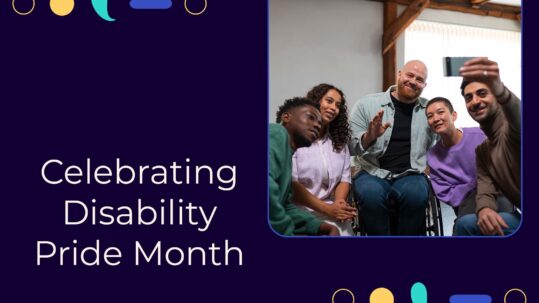

Celebrating Disability Pride Month

July is Disability Pride Month. This year, the Disability Pride Month theme is “The World Works Better With Us.” It emphasizes that inclusive, respectful, and supportive individuals with disabilities make communities function better for all. Keep reading to learn more about what disability pride is and how you can advocate for accessibility and equality for all.
What is Disability Pride?
Disability pride is the act of celebrating the efforts of disabled people who fought for years to seek justice and equity in the United States. It also celebrates disability identity and the community it fosters, recognizing disability culture and remembering the anniversary of the Americans with Disabilities Act. The ADA was signed in July of 1990 and was a revolutionary piece of civil rights legislation that reformed the environment to promote accessibility and inclusion in America.
Disability History
For centuries, disabled people have been excluded and marginalized. People with disabilities were often separated from society, deprived of education, and had their right to independence and decision-making taken away. There was no system in place to support disabled people, and it was normalized to simply shut them away in institutions.
The current Disability Rights Movement began to grow in the 1960s-1970s, with people mirroring efforts from past civil rights movements, particularly for equality for people of color and women. These activists fought to end discrimination and promoted policies that allowed disabled people to access public places, employment, education, and other things that able-bodied people tend to take for granted.
In 1990, the Americans with Disabilities Act was pending passage but stalled in the House of Representatives. In response to this delay, over 1,000 activists protested the injustice of inaccessibility by leaving their wheelchairs, canes, and other assistive devices and crawling up the Capitol steps. Now known as the Capitol Crawl, this act of defiance urged lawmakers to pass the ADA.
The ADA made it illegal to discriminate on the basis of disability in employment, education, transportation, and other areas, and mandated accessibility in architecture. This was a defining moment for disability rights. However, unfair treatment of people with disabilities is still apparent in society.
Where We Are Today
In the United States:
- 61 million adults, around 1 in 4 Americans, live with a disability.
- People with disabilities are twice as likely to live below the poverty line.
- Disabled people are four times more likely to be violently attacked compared to non-disabled people.
- Only 22% of disabled adults are employed.
It is important to remember that there is still a need for social, economic, and legal systems that support everyone in society, whether able or disabled. Ableism is often overlooked, yet its impacts are real and felt. It restricts access to education, employment, healthcare, and respect.
What Disability Pride Represents
Disability Pride Month emphasizes acceptance, showing disability isn’t something to hide or fix but part of an identity. Everyone deserves inclusion, rights, and respect without having to earn them. Disability Pride Month emphasizes that individuals with disabilities should be included in decisions affecting school, work, health care, and community life.
Ways to Celebrate
- Engage with people with disabilities by spending time with them in your community, at events, at work, at school, and online.
- Learn about disability history, culture, and the origins of Disability Pride by exploring disability rights and cultural contributions.
- Engage with community members who have disabilities by asking about their priorities and listening to their guidance.
- Challenge ableism and offensive language by confronting stereotypes and slurs, such as the R-word, and establish clear standards for respectful behavior.
Conclusion
Disability Pride is about celebrating identity, acting as a call to action for institutions and leaders to push beyond the current inclusion for real equality and change. This July, use Disability Pride Month to celebrate history, amplify disabled voices, enhance accessibility, and create a more inclusive future.