
How Education Impacts Cognition Long-Term

Cognition significantly influences health and longevity, yet the vital role of education in shaping our cognitive abilities often goes unnoticed. The level of education obtained early in life can predict cognitive health, memory performance, and the postponement of dementia symptoms. Learning later in life, however, has also been shown to stave off dementia and Alzheimer’s and benefit one’s brain health. Read on to learn more about how education impacts cognition!

The Impact of Childhood Education
Research shows that the quality and amount of adolescent education is linked to long-term cognitive health. One study found that higher-quality schools, for example, those with more teachers with graduate training, were linked to higher cognitive performance of the students, even six decades after they left high school. In addition to quality, the amount of formal education one receives is significant in predicting cognitive health years down the line, even lowering the risk of dementia. Studies have shown that higher levels of schooling are associated with increased cognitive performance.
Possible Reasons
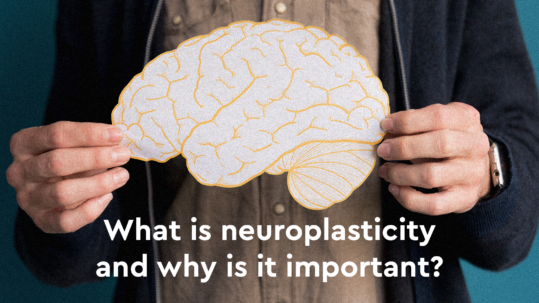
Why does education correlate so strongly with cognitive function? Scientists tend to agree that the brain changes when it is faced with a challenge. This is known as experience-dependent brain plasticity. Similar to neuroplasticity, when you repeatedly expose the brain to cognitively engaging and demanding experiences, like learning a new language or instrument, cognition improves.
The Problem
Ultimately, not everyone has the opportunity to pursue higher education or to receive a high-quality education throughout childhood and adolescence. In fact, only about 50% of Americans have received education beyond high school. It’s important to note that even if one does not have these opportunities, there are ways to develop cognition and care for brain health later in life. Let’s look at the benefits of engaging in learning activities as an adult.
Education in Later Life
It is never too late to learn new things and develop cognitive skills. In fact, learning later in life has been shown to:
- Improve cognitive function
- Lower the chance of dementia
- Improve the ability to acclimate to change
- Function independently longer
Research has shown that older adults who participate in educational sessions or training courses for various activities score higher on cognitive assessments compared to those who did not participate in learning.
One study showed that adults between 58 and 86 who dedicated fifteen hours weekly over three months to learning three new skills improved their attention and memory scores to match those of middle-aged adults (35-51 years old). Not only did the study demonstrate the positive impact that learning has on cognition in older adults, but also the emotional impact. Participants in this study were motivated to learn things on their own by taking online courses, community classes, or private lessons for subjects they were passionate about.
This increase in autonomy and confidence can help improve the emotional well-being of older adults by giving them the ability to do something on their own and continue to experience a feeling of progress in life.
Conclusion
The education we receive in our adolescence can be a good predictor of our cognition later in life. Yet, your cognitive health is not entirely determined by the education from your youth. It is beneficial to your cognitive health, as well as emotional and mental health, to continue learning throughout life. Learning later in life is linked to lower rates of dementia, higher rates of self-esteem, and possibly extends one’s ability to live independently.