
Sensory Tools for Cognitive Decline and Dementia

Sensory stimulation can be highly beneficial for people diagnosed with dementia. People experiencing Alzheimer’s and dementia can often feel a lack of independence and control in their lives. Symptoms that coincide with dementia, such as irritability, confusion, disorientation, and struggling to communicate, can cause stress and frustration due to sensory overload. However, introducing sensory tools into dementia care can provide cognitive benefits, encourage communication and social engagement, and can increase overall well-being.

How do sensory tools help dementia?
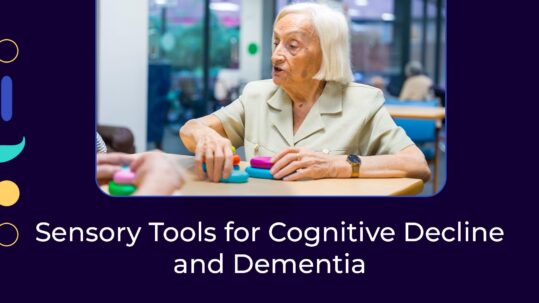
We use our senses to take in information about our surroundings. As we age, we steadily lose the strength of our senses. For people with dementia, the speed at which senses are lost is far more rapid. Therefore, incorporating sensory-engaging activities and devices, such as fidget toys, can stimulate the brain and help people maintain dexterity, potentially slowing dementia progression.
This activity stimulates the brain while helping individuals with dementia feel calmer, reduce agitation, and find a positive distraction from discomfort or confusion. It creates a more relaxing environment by easing stimulating pressures and allowing focus on a single soothing stimulus that offers relief. Overall, sensory gifts and activities are effective non-pharmacological interventions with positive outcomes for patients with dementia, especially in long-term care.
Different kinds of sensory tools
Tactile stimulation
- Using textured objects that have some type of movable feature, like a rotating button or fidget toy, can be stimulating and encourage sensory exploration
- Soft fabrics such as a blanket or plush toy can increase feelings of comfort and security
- Hand massages can increase relaxation, lower muscle tension, and create a sense of calm.
Auditory Stimulation
- Music therapy, whether done in a group or solo, can improve mood, lower stress, and potentially stimulate memory.
- Reading aloud: listening to loved ones or caregivers’ voices can build feelings of comfort and safety, especially when patients with dementia feel disoriented
Olfactory Stimulation
- Incorporating aromatherapy with essential oils or fresh herbs can help promote calm.
- Familiar scents: bringing scents familiar to the patient, such as fresh flowers or coffee, can increase feelings of nostalgia and emotional well-being.
Visual Stimulation
- Using bright colors, whether through painting or coloring, can stimulate visual interest, capture attention, and be a creative outlet.
- Incorporating light therapy through natural and artificial light can help to regulate their circadian rhythm and improve mood.
- Showing scenes from nature, such as beaches or landscapes, can be visually stimulating and promote feelings of tranquility and connection to the environment.
Taste Stimulation
- Providing flavorful foods by incorporating herbs, seasonings, and spices can increase sensory experience and enjoyment during meals.
- Cooking classes are a good way to stimulate multiple senses, as well as increase feelings of autonomy if the individual can help with simple tasks such as adding spices or stirring a sauce.
Conclusion
Sensory activities offer significant benefits for dementia patients by improving cognitive function, reducing agitation, and promoting social interaction. Incorporating these activities into daily routines can improve overall well-being and quality of life. It is important to talk with individuals about their thoughts, memories, or feelings during sensory stimulation, to keep track of effects and how they feel. Overall, such activities can decrease anxiety, promote relaxation and better sleep, and increase socialization and overall health.